






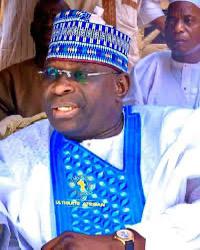


ABDULLAHI GANDUJE’S PROPOSED HISBAH AGENCY: A CONSTITUTIONAL ABERRATION, A USURPATION OF EXECUTIVE AUTHORITY, AND A THREAT TO KANO’S STABILITY

As a human rights activist and constitutional lawyer who has observed Kano’s political landscape for years, I was deeply alarmed by recent reports that former Governor Abdullahi Umar Ganduje plans to establish an “independent Hisbah agency” for the 12,000 officers disengaged by the current administration. This proposal is not only alarming—it is an outright constitutional violation.
To begin with, the law could not be clearer. Section 176(2) of the 1999 Constitution states that the Governor shall be the Chief Executive of the State. Today, that office is held exclusively by Governor Abba Kabir Yusuf. A former governor, no matter his influence or aspiration, possesses zero executive authority under Nigerian law. He cannot create, restructure, or supervise any organisation that performs functions capable of affecting public order or the administrative architecture of the State.
Kano State already operates a legally established Hisbah Board under state law, fully accountable to the elected government. If Ganduje has reforms in mind, constitutional procedure demands that he address them to the sitting Governor or the State House of Assembly—not embark on creating a parallel enforcement body outside governmental control.
Beyond the constitutional breach, several serious legal and security concerns emerge:
1. Security Powers Belong Exclusively to the Federal Government
Under Section 4 and Part I of the Second Schedule, policing and security fall strictly under the Exclusive Legislative List. Only the Federal Government may establish police or paramilitary structures. While states may set up cultural or religious bodies like Hisbah, these must operate purely under state authority.
A private individual setting up a large enforcement-style organisation is therefore illegal and unconstitutional.
2. The Kano State Hisbah Law Already Provides for One Recognised Board
The State’s Hisbah Board exists under statute. Only the sitting Governor and the State House of Assembly have power to amend or restructure it. No private citizen—not even a former governor—can arrogate such authority to himself.
3. A Dangerous Slide Toward a Private Militia
The Constitution, under Section 227, expressly prohibits “the maintenance of any private army, militia, or similar organisation.”
A 12,000-man enforcement outfit, operating outside government control, bears the unmistakable features of a militia. At a time when non-state actors are proliferating across Nigeria, this move is dangerous, reckless, and a threat to national security.
4. A Political Gambit Disguised as Religious Advocacy
The proposal is not religious—it is political. Creating a parallel Hisbah structure while a political rival is in office is a direct challenge to the legitimacy of the incumbent administration. It is a political confrontation wrapped in moral rhetoric.
5. Zero Accountability, Zero Legality
If the proposed outfit is not a government agency, crucial questions immediately arise:
- Under what legal mandate would it operate?
- Who will regulate its activities?
- Who will be liable for misconduct, excesses, or rights violations?
Any organisation exercising enforcement powers without a legal and institutional oversight framework invites abuse and chaos.
Ganduje must not undermine the constitutional authority of Governor Abba Kabir Yusuf. Creating an “independent” Hisbah body outside the state’s legal structure is incompatible with the Constitution, the rule of law, and Kano’s peace. He is no longer governor, and he must not act as one.
This proposal endangers public order and risks throwing Kano into confusion, confrontation, and possible breakdown of law and order. The people have entrusted Governor Yusuf with the mandate to lead and protect them. Ganduje must avoid actions capable of destabilising the state or provoking needless tension.
Wisdom, restraint, and respect for constitutional order must prevail. The former governor should immediately abandon this dangerous and unlawful idea in the interest of peace, legality, and democratic governance.
Hamza N. Dantani, Esq.
Human Rights Activist & Constitutional Lawyer
26/11/2025