










APC Inches Closer to Total Control: Three Members Short of Two-Thirds Majority in House of Reps
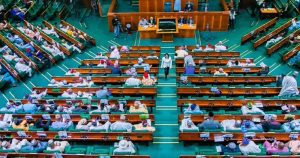
The ruling All Progressives Congress (APC) is tightening its grip on the National Assembly as it moves within striking distance of securing a two-thirds majority in the House of Representatives.
This development follows the defection of Hon. Ojema Ojotu, a lawmaker representing Apa/Agatu Federal Constituency of Benue State, from the Peoples Democratic Party (PDP) to the APC.
Ojotu’s defection, confirmed on Tuesday, raises the APC’s membership in the Green Chamber to 237, leaving the party just three seats shy of the 240 required to achieve a two-thirds majority in the 360-member House.
The move comes barely a week after the APC attained a two-thirds majority in the Senate — a feat political analysts describe as a major boost for the ruling party’s legislative dominance and its ability to push through key reforms without significant resistance.
With the latest development, the current composition of the House of Representatives now stands as follows:
- APC – 237
- PDP – 79
- Labour Party (LP) – 22
- New Nigeria Peoples Party (NNPP) – 15
- All Progressives Grand Alliance (APGA) – 5
- Social Democratic Party (SDP) – 2
- African Democratic Congress (ADC) – 1
- Young Progressives Party (YPP) – 1
The APC’s growing dominance in the lower chamber has been fueled by a steady stream of defections from opposition parties in recent months. Only last week, three PDP lawmakers from Kaduna State crossed over to the ruling party, further widening the gap between the APC and the opposition.
Political observers say the recent defection of Enugu State Governor, Dr. Peter Mbah, to the APC may trigger another wave of defections among federal lawmakers from the South East, potentially giving the party the numbers needed to reach its target.
At the inauguration of the 10th National Assembly in June 2023, the House composition was markedly different, with the APC holding 175 seats, while the PDP and other opposition parties combined controlled 182 seats, effectively forming the majority bloc.
However, the ruling party’s strategic consolidation of power through political alliances and defections has now reversed that balance.
Analysts believe that with a two-thirds majority in both chambers of the National Assembly, President Bola Ahmed Tinubu’s administration will face little legislative resistance in advancing its policy agenda.