








2027: SUPREME COURT VERDICT ROCKS POLITICAL CAMPS, MUSTAPHA, KOLO JIYA, WIKE COALITION TICKETS FACE FRESH LEGAL STORM
• Apex court restores Electoral Act provisions on party membership registers and primaries
• Ruling triggers fresh scrutiny of candidates who moved between parties after primaries
• Kwara and opposition coalition candidates among those potentially affected
A fresh legal storm has erupted over preparations for the 2027 general elections following Thursday’s landmark Supreme Court judgment restoring key provisions of the Electoral Act 2026 on political party membership registers and candidate nomination.
The seven-member panel, led by Justice Adamu Jauro, allowed the appeal filed by the Independent National Electoral Commission (INEC) against the Court of Appeal judgment which had voided portions of the new electoral law.
The apex court set aside the Court of Appeal decision and upheld the judgment of the trial court, holding that Sections 77(5) and 84 of the Electoral Act are not inconsistent with the 1999 Constitution.
The court also awarded N2 million costs against the Zenith Labour Party (ZLP).
The judgment has potentially far-reaching implications for the 2027 electoral process, particularly for politicians who participated in the primaries of one political party before moving to another platform and subsequently securing nominations.
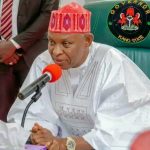
Among the political figures whose nominations could now attract renewed scrutiny are Senator Saliu Mustapha, candidate for Kwara Central, and Kolo Baba Jiya, who secured the PDP ticket for Kwara North.
The development could also reverberate across the opposition coalition, including candidates associated with the political realignment involving Minister Nyesom Wike and other members of the emerging opposition alliance.
However, Thursday’s judgment does not automatically disqualify the named candidates. Rather, it restores the statutory framework under which individual nominations may be challenged where there is an allegation of non-compliance with the Electoral Act.
At the centre of the dispute is the requirement that political parties submit their membership registers to INEC within the period prescribed by law before conducting their primaries.
The Supreme Court’s decision means that the membership-register provisions remain legally operative, potentially opening a fresh avenue for legal challenges against nominations where parties or candidates are alleged to have breached the requirements.
In Kwara, the ruling is expected to generate particular political interest following the movement of some politicians who participated in APC primary processes before subsequently defecting to the PDP and obtaining tickets on the opposition platform.
Mustapha picked the PDP ticket for Kwara Central, while Kolo Baba Jiya emerged for Kwara North through substitution.
The legal consequences of the Supreme Court judgment for those individual candidacies will, however, depend on the specific facts of each nomination and any subsequent challenge before the courts.
The ruling could also have implications for candidates emerging from the wider opposition coalition, particularly politicians who contested or participated in processes under one party before seeking nominations on another platform.
Political observers are now watching closely for possible legal actions as parties prepare their final candidate lists for the 2027 elections.
The Supreme Court ruling has therefore added a new and potentially explosive legal dimension to the already intense political battle ahead of 2027, with party nominations, membership records and the circumstances surrounding defections likely to become major issues in the coming weeks.
INEC, represented by Dr Alex Izinyon, SAN, had urged the Supreme Court to uphold the validity of the disputed provisions.
With the apex court now restoring the provisions, political parties and candidates face renewed pressure to demonstrate that their nomination processes complied with the Electoral Act.
The immediate political consequence is a fresh scramble among parties and candidates to assess the legal vulnerability of nominations already submitted to INEC.
As the 2027 contest gathers momentum, Thursday’s Supreme Court judgment may prove to be a major turning point in the battle over who ultimately makes it onto the ballot.This keeps the headline very political and punchy, but avoids presenting a potential disqualification as an already-established court order.