








Kano Govt Charges Online Journalists on Ethics, Professionalism at Historic Retreat in Jigawa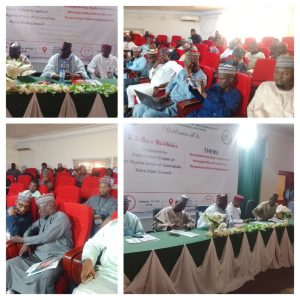
The Kano State Government has reaffirmed its commitment to strengthening responsible and ethical journalism, particularly in the digital space, as it opened a two-day retreat for online newspaper publishers drawn from Kano State.
The retreat, the first of its kind for the Kano Online Chapel of the Nigeria Union of Journalists (NUJ), was organized and sponsored by the Kano State Ministry of Information and Internal Affairs and held in Dutse, Jigawa State, on Wednesday.
Declaring the retreat open, the Commissioner for Information and Internal Affairs, Comrade Ibrahim Abdullahi Waiya, described the gathering as a landmark initiative aimed at repositioning online journalism as a critical component of modern media practice.
Addressing participants, Waiya said the retreat underscored the Kano State Government’s recognition of the growing influence of digital journalism and the need to equip practitioners with the skills, ethics and professionalism required to operate in a fast-evolving media environment.
He expressed appreciation to the Executive Governor of Kano State, Alhaji Abba Kabir Yusuf, for approving and sponsoring the training, noting that the gesture reflected the administration’s visionary leadership and strong commitment to the development of journalism in the state.
According to the commissioner, online journalists are the “symbols of future journalism practice” and bear a responsibility to uphold ethical values, professionalism and accuracy in news gathering and dissemination.
“You are the pioneers of online journalism in Kano State. The least the public expects from you is diligence in sourcing and publishing news, professionalism in narration, and avoidance of sensationalism and the ‘quick breaking’ syndrome,” Waiya stated.
He stressed that online journalism must be clearly distinguished from unregulated social media activity, noting that digital journalism is governed by legal and ethical standards that must be respected at all times.
Waiya also highlighted the growing impact of information and communication technology, artificial intelligence and other advanced tools on journalism, urging practitioners to embrace continuous self-development, integrity and brand-building to remain competitive locally and globally.
He noted that successful online media brands are built on deliberate commitment, consistency and honesty, not chance, and encouraged participants to emulate best practices already evident among reputable digital publishers.
The commissioner congratulated the Kano Online Chapel on its formal establishment and commended the Kano State Council of the NUJ and other stakeholders for their support in bringing the initiative to fruition.
He urged the chapel’s leadership to prioritize capacity building, unity and teamwork, stressing that strong internal cohesion would position the Kano Online Chapel as a model for other states.
Reaffirming government support, Waiya assured journalists of the state government’s continued commitment to press freedom and responsible journalism. He disclosed that the Ministry of Information and Internal Affairs is advocating for the establishment of a Kano State Freedom of Information Law, modeled after the federal Freedom of Information Act.
However, he called on journalists to reciprocate government support by sustaining responsible reporting and avoiding sensationalism, particularly given Kano’s cosmopolitan and politically sensitive nature.
The retreat brings together online publishers and journalists to deliberate on ethics, professionalism, digital skills and the future of journalism practice in Kano State.
Waiya concluded by wishing participants a successful training and formally declared the retreat open.