
Mahmood Yakubu: Public Service for God and Country
By Suleiman A. Suleiman (PhD)
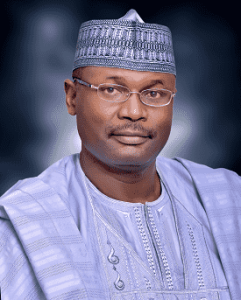
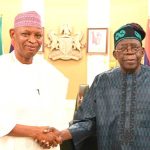
Of the 35 or so Nigerians nominated by President Bola Ahmed Tinubu over the past week to represent the country at various foreign missions and embassies, none stands out as prominently as Professor Mahmood Yakubu, the immediate past Chairman of the Independent National Electoral Commission (INEC). He stands out not only because he is arguably the most distinguished public servant on the list—having served under four Nigerian presidents in succession—but also because he left his INEC position only last month.
These two facts—that he was INEC Chairman and that he exited the office only in early October—have triggered a mild uproar among some politicians and commentators. Their criticisms revolve around two main arguments. First, that Yakubu’s nomination comes too soon after leaving INEC and therefore violates an undefined ethical guideline supposedly meant to safeguard the Commission’s independence. Second, that the appointment amounts to a “reward” for conducting the 2023 presidential election, which Tinubu won—an outcome critics fear may influence future electoral umpires.
As a journalist and political scientist, I do not attribute malicious motives to these arguments. Rather, I view them as concerns raised by well-meaning citizens and legitimate political actors who wish to strengthen our democracy. However, these concerns are misplaced—perhaps even misguided—because they arise from a narrow and superficial understanding of both democratic practice and the meaning of public service.
The Legal Position
One recurring claim is that an INEC Chairman or National Commissioner—Mahmood Yakubu or anyone else—should observe a “cooling-off” period of at least five years before holding any elective office. This idea has been the subject of long-standing debate.
Section 7 of the INEC Establishment Act (2004), the law that originally established the Commission in 1998, indeed stated that “a person who holds or has held office as a member of the Commission under this Act shall not, until after a period of five years immediately thereafter, be qualified for any elective office.”
However, during the comprehensive electoral reforms of 2010, this section was extensively debated in both chambers of the National Assembly and was repealed in the Electoral Act 2010. Lawmakers argued that the provision violated the constitutional rights of Nigerians to contest elective positions. It is also crucial to note that the prohibition applied strictly to elective offices, not appointive positions such as ambassadorships.
Therefore, that restriction is no longer part of Nigerian law and is certainly absent from the current Electoral Act 2022. The matter was debated, resolved, and settled fifteen years ago—long before anyone, including Yakubu himself, could have known he would one day serve as INEC Chairman. The argument that any post-service waiting period infringes on a citizen’s fundamental rights was valid then and remains valid today.
Is an Ambassadorship a “Reward”?
Another major claim is that an ambassadorship constitutes a reward. But in Nigerian political culture, that interpretation is inaccurate. For career diplomats, ambassadorship represents the pinnacle of professional achievement. However, for political appointees, it is widely seen as a sideline posting—sometimes even a polite form of exile from mainstream politics. Among the public, ambassadorial appointments are often viewed as consolation placements or the first step toward quiet retirement.
For Mahmood Yakubu, who served two full terms as INEC Chairman—the first to do so—an ambassadorial posting is, by all standards, a step down from the national influence and relevance he wielded at INEC. It is therefore a stretch to portray the role as a reward.
His nomination should instead be viewed as what it truly is: a continuation of service to the nation in another capacity. Genuine service to country is simply service to country, regardless of office. While our political culture may not yet fully embrace this understanding of public service, it is imperative that we move toward it.
INEC’s Independence Cannot Depend on One Man
The claim that Yakubu’s nomination undermines INEC’s independence is not only misguided; it is reckless. The neutrality of INEC does not—and must never—depend on the career paths of its former chairmen or commissioners.
INEC’s independence is anchored in law. It is also one of the most scrutinized public institutions in Nigeria, and rightly so. Its impartiality does not rest on the perceived saintliness or otherwise of any individual, but on the institutional safeguards around its operations: enabling laws, internal processes, and continuous public oversight.
Since the 2010 electoral reforms, INEC has grown stronger structurally and operationally. It is the responsibility of political parties, civil society, the media, and citizens to continue strengthening these institutions—not to fixate on the post-service careers of former officials. Democracy is a system of institutions, not personalities.
International examples reinforce this point. In some democracies, former electoral chiefs have gone on to occupy high judicial or executive offices without compromising electoral integrity. Such transitions are normal, especially in countries where democratic institutions are mature.
Our anxieties reflect our status as a relatively young democracy with just 25 years of uninterrupted civil rule. Practices considered normal elsewhere still appear unfamiliar or suspicious to us. Yet we cannot allow fear or inexperience to limit our possibilities.
A Career Rooted in Service
Most importantly, the concerns raised over this nomination reflect a shallow understanding of public service. Professor Mahmood Yakubu has had an outstanding record of service, working under four Nigerian presidents with markedly different personalities—Yar’Adua, Jonathan, Buhari, and Tinubu—across different political parties. Each saw value in his competence.
As head of the Tertiary Education Trust Fund (TETFund) from 2007 to 2012, he worked with Presidents Yar’Adua and Jonathan to strengthen Nigeria’s tertiary education system, laying foundations that continue to support the sector today. As INEC Chairman for two unprecedented terms, he oversaw reforms and innovations that enabled opposition parties in 2023 to win their highest number of elective positions in our electoral history.
His chapter at INEC has closed. A new chapter of service—to God and country—has begun. And so it should.
Suleiman is a journalist, academic, and public affairs analyst based in Abuja.