

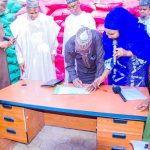
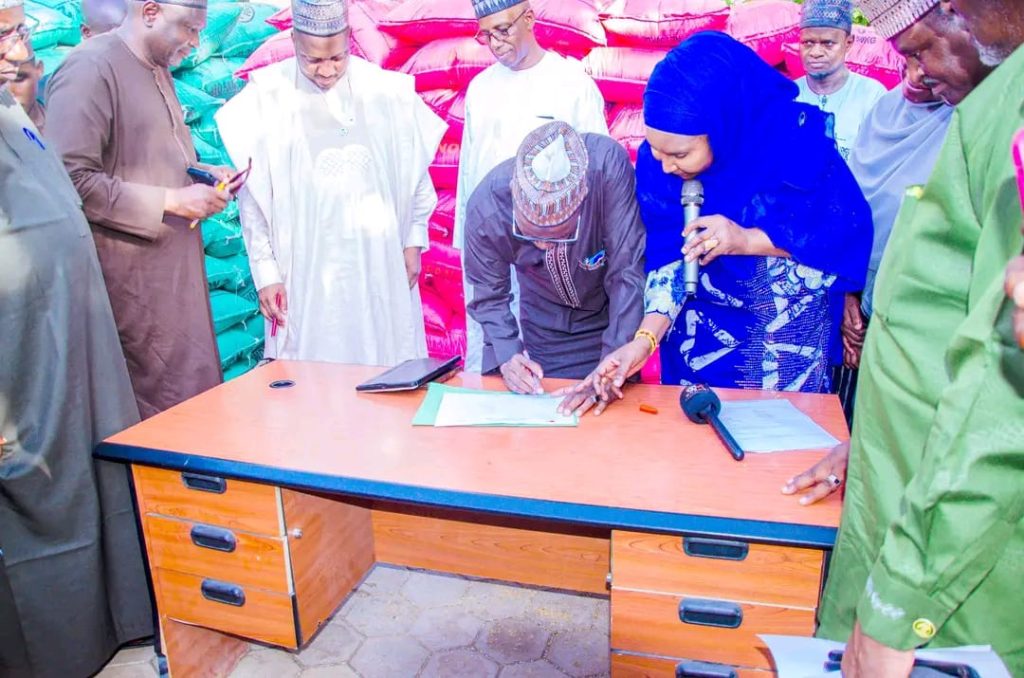
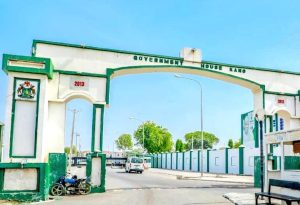
 As many Nigeria are still debating on the recently announced Aso Rock Presidential Villa solar project, the Kano State Government at the 27th State Executive Council Meeting held on Tuesday 29th April 2025 approved the installation of alternative Solar Power System at the Government at the cost of 1.11 billion Naira. Although the details of the project are yet to be known, the project expectedly is to provide steady power supply in in the Number One House in the State. It may also reduce the government expenditure in the purchase of diesel to power generators. But like using generators, solar is not free. It normally requires routine maintenance that incur large sum of money! Undoubtedly, constant power supply is very important in the running of government’s affairs.
The history of electricity supply in Kano can be traced to the late 1920s, when the then Kano Native Authority (N.A.) led by Sarkin Kano Abdullahi Bayero built a Power Station at Panshekara. As expected, the Nassarawa GRA, Emir’s Palace and other public institutions were given more preference in the power supply. This trend continues to date.
Despite the importance of this proposed solar project, it’s also pertinent to remind the government on its sacrosanct responsibility of providing basic utilities such as electricity, water, health care and security to the people. As I argued in my recent comment on Aso Rock solar project, going for solar by the government houses and institutions is not a bad idea. But it’s an indication of government’s failure to provide reliable power supply for all. This is also giving a credence to the popular notion that people must adopt alternative sources of providing basic services due to the apparent government failure.
As mentioned by Chinua Achebe in his famous book: The Trouble_ _with_ _Nigeria_ punished in 1983 that “if you want electricity, you buy your own generator; if you want want water, you sink your own bore-hole…”(p.20). This was due to the collapse of public utilities even as at then.
From all indications very soon all the ministries, agencies and other institutions will for for solar as alternative to public power supply. Some have already started installing it. But is it possible for all Kanawa or Nigerians to install solar, especially at this critical time when the federal government is trying to restrict importation of solar panels and other accessories? The answer definitely is No. How can our local industries strive without public power supply? Right now many have already closed down, while others are just struggling with the high cost of alternative sources of energy.
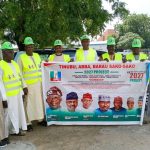
As the Kano State Government is embarking on this project at its official residence, there’s urgent need for more inclusive approach to the lingering power supply. The government need to undertake more solar projects not only street lighting, but installing solar system in the major public institutions, commercial and residential areas. The long over due Kano State Independent Power Supply Project is kicking gradually but slowly! More investment should be made in this all-important project. The Ministry of Power and Renewable Energy should redouble its efforts in providing power to the teaming populace including in rural areas.
Please if you can afford solar, go for it to avoid endless frustration of national grid. But despite the adoption of solar as alternative source of power can it fully replaced the conventional electricity? Some people even speculating that solar energy is not durable compared to traditional electricity! I am typing this post with a phone charged with solar due to the unstable power supply in the country!
Junaidu Danladi writes From Kano.