




Analysis: Kwankwaso, APC Bargaining, and the Use of Kano’s Mandate

By Kabiru Bello
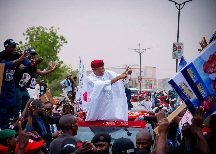
Senator Rabiu Musa Kwankwaso’s recent remarks on a possible defection to the All Progressives Congress (APC) reveal a carefully calculated political strategy, one in which the mandate freely given to Governor Abba Kabir Yusuf and the people of Kano State is being used as leverage to secure personal political guarantees.
Multiple political signals indicate that Governor Abba Kabir Yusuf is not opposed to joining the APC, but has consistently shown preference for moving together with his political leader, Kwankwaso, in order to preserve unity and stability within Kano’s political structure.
However, the delay in any collective movement is tied not to the governor’s hesitation, but to Kwankwaso’s unmet personal conditions within the APC.
Kwankwaso has made it clear that he is interested in joining the APC, but only if certain conditions are met. Crucially, these conditions are not framed around policy alignment or national ideology, but around how much political space, control, and protection he would retain within the ruling party.
*APC interest with conditions*
Kwankwaso’s statements leave little room for doubt: he is open to joining the APC once he is assured that his political structure will not be dismantled and that Kano State will remain firmly under the influence of the Kwankwasiyya movement.
By making “assurances” a prerequisite, Kwankwaso is not rejecting the APC; he is negotiating entry on his own terms.
This posture has effectively kept Governor Yusuf in political waiting, despite the governor’s openness to moving into the ruling party alongside his political mentor.
*Using Kano’s elected government as leverage*
In advancing these negotiations, Kwankwaso has repeatedly tied his potential defection to the “future of the Kano State Government.” This is where the strategy becomes evident.
Governor Abba Kabir Yusuf did not initiate these negotiations and has a clear, independent mandate from the electorate. Yet, his administration is being drawn into national political bargaining as a symbol of Kwankwaso’s negotiating strength, rather than as an active participant in the discussions.
The implicit message to the APC is clear: any deal with Kwankwaso must accommodate the Kano State Government.
This approach does not diminish the governor’s legitimacy; rather, it highlights how his mandate is being invoked to strengthen Kwankwaso’s bargaining position, even as the governor himself remains ready for a collective move.
*Governor Yusuf as political capital, not a weak actor*
Governor Yusuf remains the constitutionally elected leader of Kano State, with full authority and responsibility to the people.
However, Kwankwaso’s rhetoric increasingly seeks to frame the governor’s political future as inseparable from his own personal negotiations with the APC.
By doing so, Kwankwaso aims to:
• Increase his value to the APC as a political asset,
• Signal continued dominance over Kano’s political direction,
• And ensure that any agreement protects his long-term personal influence.
This does not reflect weakness on the part of Governor Yusuf. Rather, it illustrates how his electoral mandate is being deployed as political capital in negotiations he did not originate.
*Supporters and structure as bargaining tools*
Kwankwaso’s frequent references to his supporters and lawmakers further reinforce this strategy.
While framed as concern for collective welfare, these references also serve to amplify his relevance in talks with the APC and to justify delaying any movement that does not fully satisfy his personal demands.
The narrative being constructed is simple: stability in Kano depends on meeting Kwankwaso’s conditions.
*The real objective*
At the heart of this posture is Kwankwaso’s desire to re-enter the centre of power on his own terms, without sacrificing control of his political base.
The APC is attractive not for ideological reasons, but for access to federal power and long-term political security.
Governor Yusuf’s government, therefore, becomes a lever in Kwankwaso’s negotiations, not a partner in the process, and certainly not the obstacle to realignment.
*Kano’s mandate must stand above negotiations*
While political bargaining is a reality in Nigeria, Kano State’s future cannot be reduced to a negotiating token.
The mandate given to Governor Abba Kabir Yusuf belongs to the people of Kano and exists independently of any individual’s personal negotiations.
As discussions and speculations continue, the distinction must remain clear:
Governor Yusuf governs by the will of the people.
Kwankwaso negotiates based on personal political calculations.
The two should not be conflated.