


Tinubu Won’t Be Life President, Presidency Slams El-Rufai’s Claim
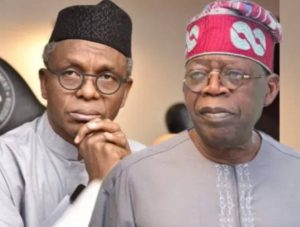
The Presidency has dismissed as “baseless and mischievous” the suggestion by former Kaduna State Governor, Malam Nasir El-Rufai, that President Bola Ahmed Tinubu could attempt to hold on to power beyond Nigeria’s constitutional term limits.
El-Rufai, a former Minister of the Federal Capital Territory and influential political figure, had warned over the weekend that Tinubu might seek to emulate Cameroon’s long-serving leader, Paul Biya, who has ruled his country since 1982 and at 92 recently indicated his interest in contesting again.
The former governor made the remarks on Saturday in Kaduna while receiving former Vice President Atiku Abubakar. Atiku had visited to express solidarity after thugs reportedly disrupted the inauguration of the African Democratic Congress (ADC) in the state, leaving several people injured.
El-Rufai’s Warning
In his comments, El-Rufai claimed that if Nigerians fail to unite ahead of the 2027 general elections, Tinubu might “cling to power for life,” drawing parallels with entrenched leaders across Africa.
The remarks immediately sparked widespread debate, with critics describing them as an attempt to stir political tension, while others saw it as an expression of growing unease among opposition leaders.
Presidency Reacts
Responding through a post on his X handle on Sunday night, Bayo Onanuga, Special Adviser to the President on Information and Strategy, strongly rebutted El-Rufai’s assertion.
“El-Rufai’s comments are nothing but unfounded speculations and political fabrications. President Tinubu has no interest in perpetuating himself in office. He remains firmly committed to the rule of law, constitutional order, and democratic principles,” Onanuga wrote.
The presidential aide urged Nigerians to disregard what he described as “alarmist rhetoric,” adding that such claims only serve to overheat the polity ahead of the 2027 elections.
Nigeria’s Constitutional Safeguards
Nigeria’s 1999 Constitution stipulates a maximum of two terms of four years each for presidents. Since the country’s return to civilian rule in 1999, no leader has succeeded in altering this limit, despite several attempts. Former President Olusegun Obasanjo’s widely reported “third term agenda” in 2006 was roundly rejected by the National Assembly and civil society groups.
Analysts note that Tinubu, who has repeatedly identified himself as a “lifelong democrat,” is unlikely to test the country’s strong resistance to tenure elongation.
El-Rufai’s Political Trajectory
El-Rufai’s remarks come amid growing speculation about his political realignment ahead of 2027. Once a close ally of Tinubu within the All Progressives Congress (APC), El-Rufai has in recent months appeared more critical of the administration. His meeting with Atiku, the presidential candidate of the Peoples Democratic Party (PDP) in 2019 and 2023, has also fueled speculation of a possible alliance between opposition blocs.
Observers say the former governor, who was a key strategist during Buhari’s presidency, has a history of making controversial political statements that reverberate nationally.
Looking Ahead to 2027
With less than two years into his presidency, Tinubu faces significant challenges, including economic reforms, insecurity, and political realignments within and outside the APC. While opposition leaders appear to be consolidating ahead of 2027, the Presidency insists Tinubu’s focus is on delivering on his “Renewed Hope” agenda rather than political maneuvering.
As the debate continues, political watchers say El-Rufai’s remarks underline the high stakes of the 2027 elections and the intensity of Nigeria’s political rivalries.