


𝐊𝐚𝐧𝐨 𝟐𝟎𝟐𝟕: 𝐁𝐞𝐲𝐨𝐧𝐝 𝐍𝐨𝐢𝐬𝐞, 𝐋𝐞𝐭 𝐭𝐡𝐞 𝐍𝐮𝐦𝐛𝐞𝐫𝐬 𝐚𝐧𝐝 𝐒𝐭𝐫𝐮𝐜𝐭𝐮𝐫𝐞𝐬 𝐒𝐩𝐞𝐚𝐤
B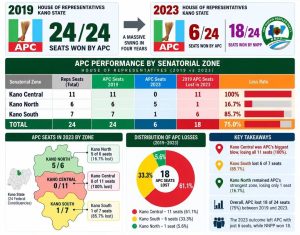 y Aliyu Isa Aliyu, Ph.D
There has been an ongoing debate about whether the APC has the political strength to win Kano State in the 2027 general elections. History, however, has a lot to tell us. The Kano of 2019 was different from the Kano of 2023, and the political reality heading into 2027 is different again.
Before making my argument, let me establish something for the record. My Kwankwasiyya journey did not begin in 2012 after I benefited from a foreign scholarship; it dates back much earlier.
My late father, Alhaji Isa Aliyu Danzabuwa, was a politician known to many in Kano’s political space, particularly those associated with His Excellency Senator Rabiu Musa Kwankwaso and Dr. Abdullahi Umar Ganduje. Growing up, I saw politicians, particularly those from Bichi, regularly visiting our home from the early 1990s until we lost my father in 2005. So, if politics were something one could inherit, I would say it is in my blood.
My active participation began in 2007, when Hon. Ahmad Garba Bichi was the PDP gubernatorial candidate. Ahead of the 2011 elections, I also worked tirelessly for the victory of the PDP and our political father, Senator Rabiu Musa Kwankwaso, as its gubernatorial candidate.
As a young graduate full of energy, I served as a polling unit agent at Shagari Quarters and participated actively in the Kwankwasiyya “Dawo-Dawo” rallies across several LGAs under the coordination of the late Alhaji Balarabe Musa Kalla, the late Mustapha Sani Kabara and Hon. Mustapha Buhari Bakwana, together with friends such as Akibu Isa Murtala, Bashir Ali Usman, Badaru Auwalu Yola, Abba Ben Umar and many others.
On election day, we spent the entire night at Guringawa Ward and later slept at the INEC office in Kumbotso LGA before escorting the ballot boxes to the state INEC office. I was also fully part of the massive celebration that followed the victory, beginning from Senator Kwankwaso’s Gandu residence.
We did all these expecting absolutely nothing in return except good governance. The present-day “ban amfana ba” mentality was never what motivated us. We simply wanted to contribute towards bringing a government we believed would serve the people.
I therefore have, to a reasonable extent, firsthand experience of how elections were organised, mobilised and won within the Kwankwasiyya political structure.
Having established that background, I will build my argument strictly on genuine and verifiable figures, historical election results and political realities, without insulting anyone. I know that some ignorant and irresponsible elements among NDC supporters may still resort to personal attacks rather than countering the substance of my argument with facts and figures.
𝐓𝐡𝐞 𝐊𝐚𝐧𝐨 𝐨𝐟 𝟐𝟎𝟏𝟗
APC has always been a strong political force in Kano, even before His Excellency Alhaji Abba Kabir Yusuf joined the party.
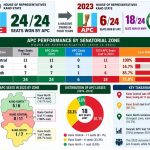
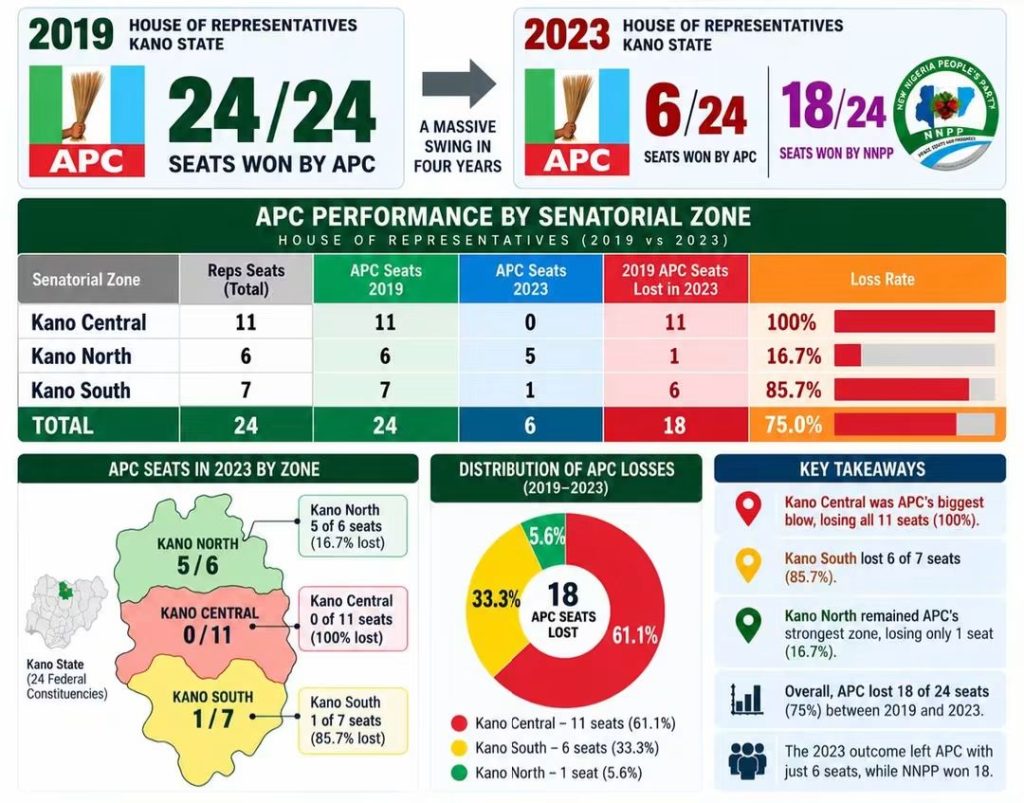
In the 2019 presidential election, APC’s candidate polled 1,464,768 votes in Kano State against PDP’s 391,593. Despite the PDP being under the leadership of Senator Rabiu Musa Kwankwaso, it lost all 24 National Assembly seats to the APC.
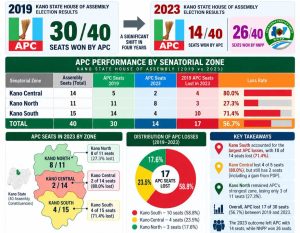
APC also won 30 of the 40 State House of Assembly seats and 28 of the 44 LGAs in the initial governorship election. Although it trailed by 26,655 votes before the supplementary election, APC eventually won the governorship contest by 8,982 votes.
These figures challenge the argument that Kano elections are determined solely by the popularity of one individual. If that were the case, the PDP, under Senator Kwankwaso’s leadership, would not have suffered such significant electoral defeats in 2019.
𝐖𝐡𝐚𝐭 𝐂𝐡𝐚𝐧𝐠𝐞𝐝 𝐢𝐧 𝟐𝟎𝟐𝟑?
Fast-forward to 2023.
The APC presidential candidate polled 517,341 votes in Kano State. The party, however, suffered significant losses in the National and State Assembly elections. It lost all its 11 House of Representatives seats in Kano Central to the NNPP, one in Kano North and five in Kano South. It also lost 17 State Assembly seats to the NNPP.
In the gubernatorial election, the NNPP defeated the APC by 128,897 votes. It was undoubtedly a significant margin, but the result did not occur in a political vacuum.
APC entered the 2023 elections as a divided house. Before the election, the party had lost several influential political figures, particularly from Kano South, including Hon. Kawu Sumaila, Hon. Kabiru Alhassan, Gwani Ali Bukar Makoda, Hon. Safiyanu Harbau, Hon. Kofa and several others.
Similar losses occurred in Kano North and Kano Central, including His Excellency Malam Ibrahim Shekarau, who still commands considerable followership through the Shura movement.
These defections weakened the APC while simultaneously adding strength, structures and experienced grassroots mobilisers to the opposition. They were, in my view, among the major factors that shaped the 2023 outcome.
𝐓𝐡𝐞 𝐏𝐨𝐥𝐢𝐭𝐢𝐜𝐚𝐥 𝐄𝐪𝐮𝐚𝐭𝐢𝐨𝐧 𝐇𝐞𝐚𝐝𝐢𝐧𝐠 𝐈𝐧𝐭𝐨 𝟐𝟎𝟐𝟕
As we approach 2027, the political equation has changed considerably once again.
With the defection of the serving Governor and many of his political allies, Kwankwasiyya has lost a substantial portion of the structures that sustained it across the 44 LGAs.
CRC, Kano Proper, scholars, Lafiya Jari, Kwankwasiyya, NNPP and Option A structures, Jagorori, LGA caucuses, interstate teams and contact committees have all experienced significant defections. From my knowledge and experience within these structures, I estimate that at least 70% of some of them have moved to the APC.
These are not merely political names. They are grassroots foot soldiers with experience, networks, financial capacity and the ability to mobilise voters from polling units through wards and LGAs. Rebuilding structures accumulated over many years is not an overnight task.
Kwankwasiyya has also lost several long-standing political figures and grassroots organisers, including Excellency Ahmad Garba Bichi, Alhaji Audu Kirare, Dayyabu Maiturare, Baffa Sani Gaya, Alhaji Ali Bukar Makoda, Rt. Hon. Isiyaku Ali Danja, Dr. Danyaro Yakasai, Hon. Surajo Harisu Danbatta, Hon. Umar Haruna Doguwa, Rt. Hon. Gambo Sallau, Hon. Garba Hungu, Hon. Yusuf Ogan Boye, Dr. Baffa Bichi, Hon. Hamza Maifata, Hon. Muhammad Ahmad, Speaker of Dawakin Tofa, Hon. Butu-Butu of Rimin Gado, Hon. Tijjani Abdulkadir Jobe, Hon. Ali Madaki and many others whose names could run into hundreds.
These were not outsiders to the movement. Many were part of the political machinery, networks and grassroots structures that sustained Kwankwasiyya for years. Losing such individuals therefore cannot reasonably be dismissed as politically insignificant.
At the same time, what Kwankwasiyya has lost has largely become an addition to the APC, much like the political losses the APC suffered ahead of the 2023 elections. This reversal of political strength is what makes the 2027 calculation fundamentally different from that of 2023.
Politics cannot be objectively analysed through noise, sentiment or social-media assumptions. Elections are shaped by numbers, structures, alliances, grassroots networks, resources, mobilisation and the ability to protect votes from the polling unit up to the final declaration of results.
Anyone who genuinely wants to understand where Kano politics is heading in 2027 must objectively study how these variables have changed.