

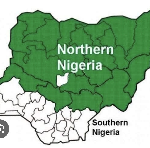







Northern Nigeria’s Economic Weight Sparks Debate Over National Contributions
By Mohammed Bello Doka 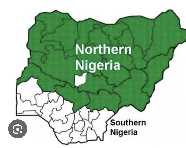
A renewed debate over the economic contributions of Northern Nigeria to the federation has brought fresh scrutiny to long-standing regional narratives, with data from multiple agencies suggesting a complex web of interdependence rather than imbalance.
The discussion, reignited by recurring claims questioning the North’s role in national productivity, has drawn responses grounded in statistics from bodies such as the National Bureau of Statistics, the Nigeria Extractive Industries Transparency Initiative, and the Federation Account Allocation Committee.
Agriculture Dominates National Output
At the centre of Northern Nigeria’s economic contribution is agriculture, which accounts for between 21 and 25 percent of Nigeria’s Gross Domestic Product, according to recent figures. The region produces over 75 percent of the country’s staple crops, including rice, maize, sorghum, millet, and beans.
In 2025 alone, national rice production stood at 9.37 million metric tonnes, with Northern states contributing the bulk. Similar dominance is recorded in maize production, estimated at 11.44 million metric tonnes, as well as groundnuts, tomatoes, onions, and peppers.
Livestock production also remains heavily concentrated in the North, with approximately 90 percent of Nigeria’s cattle population located in the region. Sheep, goats, and poultry farming further reinforce its role in sustaining the country’s food supply chain.
Economists note that a significant portion of this output—estimated at about 40 percent—is transported to Southern markets annually. The value of these inter-regional food transfers is put at roughly $21 billion, helping stabilise food prices nationwide despite rising inflation.
Minerals and Industrial Inputs
Beyond agriculture, Northern Nigeria hosts a majority of the country’s solid mineral deposits, including gold, lithium, limestone, iron ore, and coal. These resources underpin key industries such as cement production and steel manufacturing.
Although the mining sector contributes a modest share to GDP, recent growth has seen its contribution rise to about 4.6 percent in 2025. Official revenues from the sector are estimated at around ₦70 billion, with the North accounting for a notable share.
Industry analysts, however, point to persistent losses due to illegal mining, estimated at between $2 billion and $3 billion annually.
Hydropower and Energy Supply
Northern Nigeria also plays a critical role in the country’s energy mix, hosting about 80 percent of its hydropower infrastructure. Major dams such as Kainji, Jebba, Shiroro, and Zungeru collectively generate a substantial portion of electricity supplied to the national grid.
Despite operating below full capacity due to infrastructural and environmental constraints, hydropower from the region contributes roughly 30 percent of Nigeria’s electricity generation, while also yielding federal revenues through concessions and fees.
Tourism, Trade, and Manufacturing
The region’s tourism assets, including wildlife parks and cultural festivals, contribute between 20 and 30 percent of Nigeria’s tourism earnings, estimated at $3.77 billion annually. Events such as the Durbar festivals and the Argungu Fishing Festival remain major attractions.
In manufacturing, Northern Nigeria accounts for roughly a quarter of national output, particularly in cement production and agro-processing. Leading industrial players continue to rely on raw materials sourced from the region.
Cross-border trade through Northern corridors linking Niger, Chad, and Cameroon also contributes significantly to customs revenue, estimated at up to ₦1 trillion annually.
Population and Consumption Power
With over half of Nigeria’s population residing in the North, the region represents a major consumer base. This demographic weight translates into substantial contributions to Value Added Tax (VAT), Company Income Tax (CIT), and telecom revenues.
Estimates suggest Northern-linked consumption and services generate between ₦1 trillion and ₦2 trillion in federal revenue annually.
A Question of Interdependence
Despite these contributions, the region continues to face challenges, including higher poverty rates, insecurity, and infrastructural deficits. Analysts argue that such indicators reflect structural issues rather than a lack of economic input.
The broader consensus among experts is that Nigeria’s economy functions through regional interdependence. While the South remains dominant in oil production, ports, and finance, the North provides food security, energy infrastructure, and critical raw materials.
Conclusion
As debates over fiscal balance and regional contributions persist, available data suggests that Northern Nigeria remains a key pillar of the national economy. Analysts warn that framing any region as economically redundant risks oversimplifying a deeply interconnected system.
The ongoing discourse, they argue, underscores the need for evidence-based engagement in addressing national economic challenges.