







Kano Strengthens Budget Coordination to Boost Healthcare Services
The Kano State Government has intensified efforts to address systemic coordination gaps that delay the delivery of primary healthcare services, as officials and development partners convened for a strategic reform meeting aimed at improving how healthcare funds are planned, released, and utilised across the state.
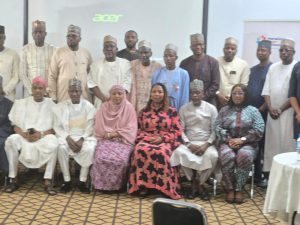
The initiative, which forms part of ongoing health sector reforms, was the focus of a two-day PHC Fiscal Governance and Budget Credibility Inception Meeting held in Kano. The engagement brought together senior government officials, healthcare administrators, and reform partners to explore practical ways of ensuring that approved healthcare funding translates into improved service delivery at the facility level.
Primary healthcare in Kano is financed through multiple funding streams, including the state budget, the Basic Health Care Provision Fund (BHCPF), local government allocations, and reform-linked financing initiatives. However, despite sharing the same objective of improving healthcare services, these funding sources operate through separate administrative channels, approval processes, and timelines, often leading to delays in implementation.
Stakeholders at the meeting acknowledged that such coordination challenges frequently result in stalled programmes, delayed supply of essential medicines, and disruptions to community outreach services, ultimately affecting patient care at health facilities.
Rather than introducing new policies or bureaucratic frameworks, the meeting focused on strengthening collaboration among institutions responsible for healthcare planning, financing, implementation, and oversight. Participants examined how existing systems could be better aligned, particularly at transition points where responsibilities shift between agencies.
The engagement marks the commencement of a Gates Foundation-supported programme being implemented by the International Budget Partnership (IBP) Nigeria in partnership with the Kano State Government. The programme is designed to operate within existing government systems while enhancing predictability in funding flows, improving information sharing, and ensuring effective follow-through across the primary healthcare value chain.
Country Director of IBP Nigeria, Yinka Babalola, emphasised that the initiative is not intended to redefine institutional roles but to improve efficiency across the healthcare financing process.
“This is not about teaching anyone their job. It is about ensuring that once one institution completes its responsibility, the next step follows seamlessly and on schedule, so that services do not stall between offices,” Babalola said.
The reform initiative comes at a critical time, as Kano State participates in national reform programmes such as HOPE-PHC and HOPE-GOV, which tie performance incentives to measurable improvements in primary healthcare outcomes. These programmes assess areas such as realistic planning, effective budget execution, transparency, and the efficient flow of funds including the BHCPF.
Speaking at the event, the Kano State Commissioner for Health, Dr. Abubakar Labaran Yusuf, said the state government is committed to aligning its healthcare financing with budgetary provisions in order to strengthen service delivery across primary healthcare facilities.
“We have attended this programme to enable the state align itself with budget provisions and identify ways to improve primary healthcare funding. Since we assumed office, we have improved several indicators. Maternal and child mortality rates have reduced, immunisation coverage is improving, and zero-dose cases are also declining,” he said.
Dr. Yusuf, however, noted that coordination among relevant ministries and agencies remains a key challenge in maximising the benefits of federal healthcare reform initiatives.
“The challenge we are facing now is how to effectively coordinate all relevant ministries and agencies so that Kano State can fully benefit from what the Federal Government has introduced through the HOPE programme. We are optimistic that all stakeholders will work together so that the state can fully access and utilise these opportunities,” the commissioner added.
According to IBP Nigeria’s Strategy and Policy Lead, Onyekachi Chukwu, the new performance-based reform environment increases the importance of institutional coordination.
“These reforms have raised the stakes. Outcomes are now closely monitored, and coordination determines whether improvements are actually felt in healthcare facilities,” Chukwu explained.
By the conclusion of the meeting, stakeholders are expected to establish clearer coordination frameworks, identify actionable follow-up steps, and develop structured mechanisms for sharing information as Annual Operational Plans transition into implementation phases.
Participants stressed that the ultimate goal of the reform efforts is to improve healthcare outcomes for residents, noting that efficient coordination directly impacts service delivery at the grassroots level.
“When coordination works, healthcare facilities experience the difference. Medical supplies arrive on time, outreach programmes are implemented as scheduled, and healthcare workers can concentrate on delivering quality care,” participants observed.
The meeting signals the beginning of a broader, long-term collaboration aimed at strengthening healthcare financing systems in Kano State. Officials expressed optimism that the reforms would ensure that public investments in healthcare produce tangible results for communities, particularly in underserved areas where primary healthcare facilities remain the first point of contact for medical services.